Comments Off on Sustainable Innovation: How Custom BLDC Motors Drive the Next Generation of Smart, Eco-Friendly Dust Collectors
As industries worldwide grapple with the dual challenges of environmental sustainability and operational efficiency, the demand for smarter, greener technologies has never been more pressing. In the realm of air purification, this translates into a critical need for dust collection systems that are not only highly effective but also energy-efficient, quiet, and compact. This article explores a pioneering approach to achieving these goals through the strategic development of custom Brushless DC (BLDC) motors, setting a new benchmark for sustainable innovation in industrial applications.
The Green Imperative: Reimagining Dust Collection for a Sustainable Future
Traditional dust collectors often come with a significant environmental footprint—characterized by high energy consumption, considerable noise pollution, and bulky designs that demand substantial material resources. The path to a sustainable future requires a fundamental shift in design philosophy. Our focus here is on a transformative methodology that prioritizes environmental responsibility and resource optimization from the outset: the “Motor-Outward” design approach.
Instead of fitting a fan and housing around a pre-existing motor, this innovative strategy begins by identifying the optimal aerodynamic performance required for the application. A custom BLDC motor is then meticulously engineered to deliver precisely this performance, ensuring maximum efficiency and minimal waste. The entire system—from the airflow path to the housing—is then designed holistically around this bespoke motor, creating a perfectly integrated and optimized solution.
Intelligence Meets Efficiency: The Smart BLDC Advantage
The integration of smart technology is paramount in modern eco-friendly systems. The latest generation of dust collectors, powered by custom BLDC motors, incorporates advanced smart controllers that offer unparalleled operational intelligence. These systems can dynamically adjust fan speeds in real-time, responding to critical environmental parameters such as PM2.5 concentration levels and the clogging status of filters. This adaptive control not only maintains optimal air purification efficiency but also significantly reduces energy consumption and extends the lifespan of consumables, aligning perfectly with sustainable operational practices.
Furthermore, the physical design benefits from cutting-edge engineering. Utilizing computer-aided airflow simulations and structural optimization, coupled with precision manufacturing techniques like plastic injection molding, allows for the creation of incredibly compact and lightweight units. This reduction in material usage and improved portability contributes directly to a lower carbon footprint throughout the product lifecycle.
Quantifiable Impact: A Leap Towards Eco-Efficiency
The adoption of this integrated, custom BLDC motor approach has yielded remarkable and quantifiable results in a recent smart dust collector project:
Performance Indicator
Sustainable Impact
Energy Consumption
45% Reduction (Significant operational cost savings and lower carbon emissions)
Noise Level
30% Reduction (Improved working environments and reduced acoustic pollution)
Weight
30% Reduction (Enhanced portability, reduced shipping emissions, and easier installation)
Volume
15% Reduction (Smaller footprint, optimized material use)
Intake Speed
15% Increase (Faster and more effective air purification)
Airflow Output
5% Increase (Improved overall system performance)
These figures underscore the profound impact of combining intelligent design with advanced motor technology, delivering not just performance enhancements but also substantial environmental benefits.
Precision Engineering for Peak Sustainability
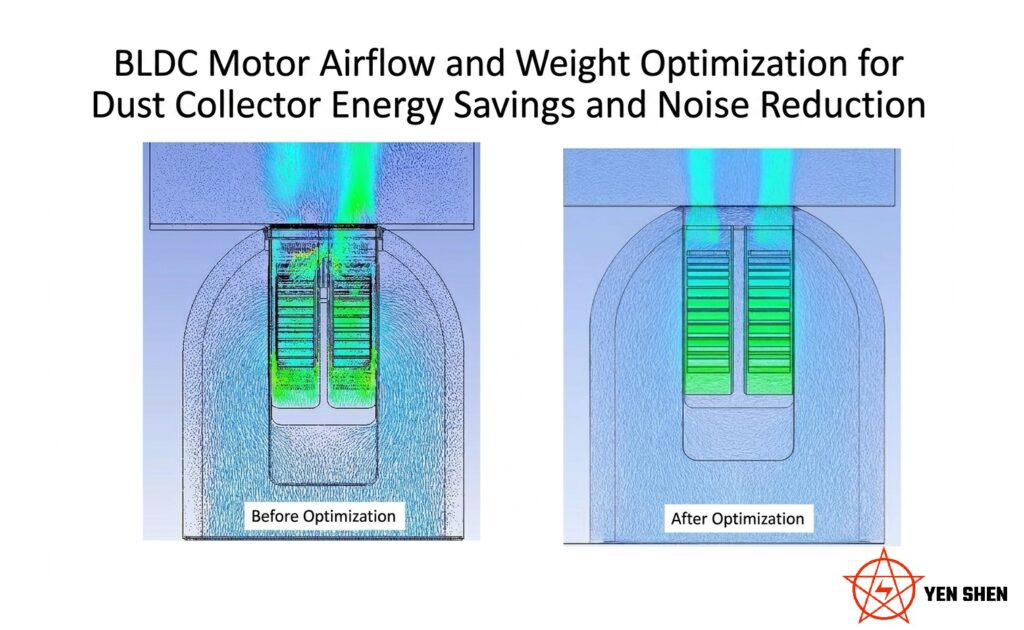
Beyond the motor itself, the redesign of critical components like impellers and ducts plays a vital role in achieving peak sustainability. By employing advanced computational fluid dynamics (CFD) simulations, engineers can eliminate inefficiencies inherent in traditional designs, such as turbulent airflow and recirculation. This precision engineering ensures optimal aerodynamic flow, leading to quieter operation, reduced energy loss, and balanced dual-impeller output without mutual interference. The result is a system that operates at its most efficient, minimizing energy waste and maximizing air purification effectiveness.
Conclusion: Paving the Way for a Greener Industrial Future
The strategic development of custom BLDC motors, guided by a “Motor-Outward” design philosophy and integrated with smart controls, represents a powerful paradigm for sustainable innovation. It demonstrates that high performance and environmental responsibility are not mutually exclusive but can be achieved through thoughtful engineering and a commitment to holistic design. As industries continue to evolve, embracing such advanced motor technologies will be crucial in building a future where industrial processes are not only efficient and productive but also inherently green and sustainable.
Comments Off on Innovation at the Helm: Technological Trends Reshaping Power Capacitors for Electromechanical Systems
The world of industrial electromechanical systems is undergoing a profound transformation, driven by digitalization, sustainability mandates, and the relentless pursuit of operational excellence. At the core of this transformation are the fundamental power components that make these systems function. Power capacitors, long considered mature and stable commodities, are now at the center of a quiet technological revolution. For system designers, plant engineers, and technical procurement officers, understanding these shifts is no longer optional—it’s critical to specifying systems that are efficient, reliable, and future-proof.
This analysis moves beyond market dynamics to explore the key technological trends redefining power capacitors for industrial applications. We examine the innovations in materials, design, and intelligence that are enabling capacitors to meet the demands of next-generation smart factories, renewable energy grids, and advanced motor drive systems.
Trend 1: The Drive for Higher Density and Extended Lifespan
The pressure on industrial infrastructure to do more in less space with greater reliability is translating directly into capacitor design requirements.
Advanced Dielectric Materials: While metallized polypropylene film remains the industry workhorse for power applications, significant R&D is focused on enhancing its properties. Innovations include:
Hybrid Dielectrics: Combining different dielectric materials or using advanced nanoscale coatings to achieve a superior balance of high dielectric strength, low losses, and improved self-healing characteristics.
High-Temperature Films: Development of films that maintain stability and longevity at sustained temperatures of 105°C, 115°C, and even 125°C. This is crucial for capacitors in sealed enclosures or in proximity to other heat-generating components like IGBTs in drives.
Design for 200,000+ Hour Service Life: Leading manufacturers are pushing the boundaries of predicted service life. This is achieved through:
Precision Winding and Impregnation: Advanced, vacuum-pressure impregnation processes ensure complete elimination of air pockets and uniform dielectric fluid distribution, drastically reducing partial discharge and the risk of premature failure.
Robust Dry Technology: The shift towards “dry” capacitor technology—using gas or solid impregnants instead of liquid—eliminates the risk of leakage, simplifies disposal, and enhances safety, making them ideal for sensitive or hard-to-service environments.
Trend 2: Intelligence and Condition Monitoring
The era of the “dumb” capacitor is ending. The integration of Industry 4.0 principles is bringing intelligence directly to the capacitor bank.
Smart Capacitors with Embedded Sensors: Next-generation units are being equipped with sensors that monitor internal temperature, case strain, and electrical parameters in real-time. This data is vital for moving from preventive to predictive maintenance.
Communication Protocols: These smart capacitors can communicate via standard industrial protocols (e.g., Modbus TCP, PROFINET, IEC 61850), feeding data directly into the facility’s SCADA or Plant Asset Management system. This allows for:
Early warning of derating or impending failure.
Optimization of switching cycles to maximize efficiency and component life.
Simplified diagnostics and reduced downtime during troubleshooting.
The table below contrasts the capabilities of traditional versus smart, connected capacitor solutions.
Aspect
Traditional Capacitor Bank
Smart, Connected Capacitor System
Health Monitoring
Periodic manual inspection, IR thermography, or failure-based.
Continuous, real-time monitoring of temperature, voltage, current, and capacitance.
Maintenance Strategy
Preventive (scheduled) or reactive (upon failure).
Predictive & Condition-Based. Maintenance is performed when data indicates a need.
System Integration
Operates as a standalone component. Minimal data feedback.
Fully integrated into plant networks. Provides operational and health data to control systems.
Primary Value
Cost of component, basic function (PFC).
Reduced downtime, optimized performance, lower total cost of ownership (TCO).
Trend 3: Specialization for Demanding Applications
As application environments become more extreme, capacitors are being specifically engineered to meet unique challenges.
Capacitors for Harsh Environments: This includes designs with:
Corrosion-Resistant Coatings and Housings: For offshore wind installations, chemical plants, or coastal facilities with high salt mist.
Enhanced Vibration and Shock Resistance: Critical for capacitors used in mining equipment, traction applications (rail), or heavy mobile machinery.
High dV/dt and Peak Current Capability: The rise of wide-bandgap semiconductors (SiC and GaN) in power electronics enables faster switching frequencies and higher efficiencies. However, this places immense stress on DC-link and snubber capacitors, which must now handle extremely high rates of voltage change (dV/dt) and surge currents without degradation.
The Competitive Landscape: Who is Leading the Innovation Charge?
Different players in the market are approaching these technological trends from varied strategic positions.
Global Material & Component Science Leaders (e.g., TDK, Panasonic): These companies leverage their deep expertise in fundamental materials science to drive innovation in dielectric films and advanced metallization techniques. Their strength lies in developing the next-generation core materials that will define future capacitor performance limits.
Specialized Power Quality Innovators: This group, which includes companies like Yuhchang Electric, ICAR, and Electronicon, focuses on application-led innovation. Their R&D is closely tied to solving specific field problems:
They are often among the first to industrialize new materials into robust, field-ready products for harsh industrial settings.
They excel at system-level design, creating intelligent capacitor banks with integrated protection, control, and monitoring tailored for complex power quality applications like active harmonic filtering.
Volume Manufacturers: While crucial for the economy segment, these players are typically fast followers in technology. They adopt proven innovations once they become standardized and cost-effective to manufacture at scale.
Strategic Implications for Procurement and Design
For technical buyers and engineers, these trends necessitate a shift in evaluation criteria.
Specify for the Future, Not Just the Present: When designing a new system, consider specifying capacitors with higher temperature ratings or communication-ready capabilities even if not immediately needed. This provides headroom for future expansion or upgrades.
Evaluate the Total Ecosystem: The value of a smart capacitor lies in its data and connectivity. Assess the supplier’s software support, protocol compatibility, and ease of integration with your chosen control architecture.
Partner with Innovators: For mission-critical or cutting-edge applications, engaging with specialized innovators can provide access to the latest technology and co-development opportunities. Their focused expertise can de-risk projects that push performance boundaries.
Conclusion: Technology as the Ultimate Differentiator
In the industrial power capacitor market, competition is increasingly defined by technological prowess rather than price alone. The trends toward higher density, intelligence, and application-specific ruggedness are creating a clear divergence between basic commodity components and advanced, value-engineering solutions.
Suppliers who invest in deep R&D and maintain close collaboration with end-users in sectors like renewable energy, heavy industry, and smart infrastructure are best positioned to lead. They transform the capacitor from a passive cost item into an active contributor to system resilience, efficiency, and intelligence.
For the industry professional, staying informed on these technological currents is essential. The choices made today in component selection will directly determine the performance, maintainability, and longevity of industrial systems for the next decade and beyond.
Comments Off on 2026 T-Glass Shortage: Disrupting NVIDIA & Apple AI Hardware
Critical Impacts on AI Supply Chains
T-Glass fiberglass cloth shortage has emerged as a critical bottleneck for AI hardware production. NVIDIA’s GB200 GPU racks and Apple’s M-series server boards face 3-6 month delivery delays as lead times extend from 4 weeks to over 6 months. Material costs have surged 20-40%, with Japan’s Nittobo maintaining exclusive supply of this low-CTE (<5ppm) essential component for high-layer count PCBs and IC carriers.
T-Glass Technical Role in AI Hardware
T-Glass provides thermal stability (CTE <5ppm) and low dielectric constant (Dk<3.0) required for 12+ layer PCBs in AI servers. Each GB200 NVL72 rack consumes 5-8x more high-end fiberglass cloth than previous A100 systems, while Apple’s server expansion adds further pressure.
Apple is qualifying Grace Fabric (China) production while developing alternatives with Mitsubishi Gas Chemical, though high-spec validation requires 12+ months.
Custom T-Glass Specifications Drive Shortage
AI hardware evolution demands specialized T-Glass variants beyond standard specifications:
CPO Applications: Ultra-thin (<40μm) weaves for co-packaged photonics
HBM Integration: Precision density matching for 1000-layer substrates
Market Shift: Custom specifications now represent 50%+ of AI server demand (up from 20%)
T-Glass shortage represents a structural challenge rather than temporary disruption, requiring immediate supply chain reconfiguration for 2026 AI hardware deployments.
Comments Off on Navigating the Key Reliability Challenges of Medical Connectors
In the evolving medical-device landscape, the performance of connectors often receives less attention than the headline functions of imaging systems, monitors or therapy devices. Yet connectors are a critical interface—and failures can derail an entire system. This article presents a neutral overview of three major challenge categories for medical connectors, examines how leading manufacturers are responding, and provides procurement-oriented guidance for device-owners and engineering teams.
Three Core Challenge Areas
Contact Degradation and Signal Integrity
Connectors are designed to provide stable electrical and/or signal transmission. In a medical environment, however, multiple factors threaten that stability: mating/un-mating cycles, micro-motion or vibration, surface corrosion and wear of contact coatings. A research paper states that major failure mechanisms include fretting wear, coating wear-through, contact-force relaxation and corrosion. Contact resistance drift is a key symptom: as resistance rises, heat generation increases, signal integrity worsens, and reliability drops. When procuring, ask for: contact resistance before vs after X cycles, data on coating durability, specification of mating cycles.
Sterilisation, Cleaning and Environmental Stress
Medical connectors often operate in harsh cleaning/sterilisation regimes: steam, EtO, chemical disinfectants, repeated exposure to humidity, temperature cycling and fluids. According to industry commentary, sterilization compatibility is a must for medical connectors exposed to patient/environmental zones. (Connector and Cable Assembly Supplier) Purchasers should seek: validated cleaning/sterilisation cycle data, fluid-ingress test results, material compatibility statements for cleaning agents, and sealing/over-moulding design details.
Mechanical Load, Handling, Cable Stress
In many applications—especially portable/wearable devices—connectors must tolerate repeated connection/disconnection, cable pull forces, drop impacts, vibration and torsion. One article summarises that connectors in harsh environments fail more often due to repeated use and physical stress. (amphenolalden.com) From a procurement perspective: review cable-strain relief, retention/pull-force specs, drop-test data, and ensure the connector design integrates appropriately with the device’s mechanical demands.
Market Response – Key Players & Solutions
Several manufacturers are defining the state-of-the-art in medical-connector reliability. For illustration:
Molex offers medical connectors described as “ultra-compact footprints, exceptional signal integrity and robust power-handling … maintain integrity through rigorous mating and sterilization cycles.” (molex.com)
TE Connectivity supplies surgical-grade medical connectors with high-pin-count, ZIF and fine-pitch options, rated for thousands of mating cycles. (te.com)
Amphenol Alden Products specialises in high-reliability medical cable-assemblies and connectors, collaborating early in design with device OEMs. (amphenolalden.com)
LEMO provides connectors trusted in critical medical applications worldwide, emphasising durability, regulatory compliance and innovation. (lemo.com)
And of course, Cambus Corporation remains a key player to watch, with its focus on high-reliability medical connectors. (cambus-tw.com)
Below is a comparison table of typical design/testing criteria in this sector:
Criterion
Typical Specification Range
Why It Matters
Mating Cycles
1 000 to 100 000+
Indicates how many times connector can mate/un-mate
Contact Resistance
< 10 mΩ (initial), rise limited over life
Low resistance ensures signal/power integrity
Pull/Retention Force
Specified in N (10-100 N)
Ensures cable won’t detach under use
Sterilisation Cycles
1 000+ cycles at defined method
Validates long-term exposure to cleaning/sterilisation
Environmental Tests
Temp/humidity, salt-spray, vibration
Ensures lifetime reliability under real-world stress
This table gives you a guide for comparing offerings from different connector suppliers.
Procurement Guidance – What to Ask and Consider
When selecting medical connectors for a device or system, consider the following checklist:
Material & plating details (e.g., base metal, gold/palladium plating thickness)
Mating cycle test data — including degraded contact resistance over cycles
Sterilisation/cleaning compatibility reports — specific to your facility’s methods
Mechanical stress qualification — pull/strain, drop, vibration data
Environmental aging & corrosion data — how the connector behaves after exposure
Traceability & quality system proof — e.g., ISO 13485 compliance, batch traceability
Service-lifetime prediction or accelerated-life testing results — useful for long-life devices
Long-Term Reliability: The Hidden Complexity
Understanding connector reliability is non-trivial. A recent engineering study notes that modelling connector lifetime is challenging because of multiple interacting failure modes (wear, corrosion, contact-force loss, thermal/mechanical cycling). arXiv Accordingly, relying solely on simple spec sheets is insufficient. Suppliers able to provide detailed accelerated life testing, field-data and clear test-protocols provide more reliable assurances.
Final Thoughts
Medical connectors may seem like a straightforward component—but in truth they operate at the interface of electrical, mechanical and environmental challenges. By zeroing in on contact integrity, sterilisation resilience and mechanical durability, and by selecting suppliers who provide validated data and traceable processes, procurement teams and equipment owners can significantly reduce risk.
Comments Off on Strategic Procurement in RF Filters: A B2B Guide to Choosing the Optimal OEM or ODM Manufacturing Model for High-Performance Systems
Executive Summary: Navigating Manufacturing Models in RF Filter Procurement
In the rapidly evolving landscape of radio frequency (RF) technology, the decision between utilizing an Original Equipment Manufacturer (OEM) or an Original Design Manufacturer (ODM) model is a critical strategic inflection point for businesses procuring RF filters. This choice profoundly affects time-to-market, initial costs, design control, and intellectual property (IP) retention. OEM is strategically optimal for firms prioritizing high customization, unique product features, and proprietary IP control, despite involving higher upfront costs and potentially longer development cycles. Conversely, ODM offers a cost-effective, faster path to market by leveraging existing designs, making it ideal for standard product lines or initial market entry, though it involves limited customization and less control over the base design IP. Procurement professionals must align their manufacturing strategy with long-term business goals, internal capabilities, and specific application requirements, particularly given the dynamic industry trends towards high-frequency communication systems like 5G and Wi-Fi 7.
Understanding the Core Manufacturing Models: OEM vs. ODM Definitions and IP Control
The fundamental difference between OEM and ODM centers on who owns the product design and intellectual property (IP).
Original Equipment Manufacturer (OEM) The OEM model involves a company designing a product in-house, then outsourcing only the manufacturing process to a third party. This is the preferred route when the business strategy is centered on providing unique, high-quality products with proprietary technology.
Feature
Advantage (OEM for RF Filters)
Disadvantage (OEM for RF Filters)
Design & IP
Complete control over design specifications and IP, crucial for protecting proprietary technology and maintaining a competitive edge.
Less control over IP: The manufacturer often retains the IP for the base design.
Customization
Flexibility to create highly customized RF filters tailored to specific customer or niche market requirements.
Higher costs typically due to extensive Research and Development (R&D) expenses and the need for specialized design capabilities.
Quality
Ability to oversee the entire design process, ensuring the final product meets stringent quality standards, essential for critical applications (e.g., telecommunications, defense).
Longer time to market because developing a product from scratch is time-consuming.
Original Design Manufacturer (ODM) The ODM model involves a manufacturer designing and producing a standardized product that can then be rebranded and sold by different companies. This is a strategic choice for businesses focused on rapid market entry or those seeking to minimize R&D investment.
Feature
Advantage (ODM for RF Filters)
Disadvantage (ODM for RF Filters)
Cost & Risk
Cost-effectiveness by eliminating the need for extensive R&D, reducing initial costs. Lower risk for testing new products or entering new markets.
Limited customization, which may not meet the specific needs of certain complex applications.
Speed
Faster time to market by leveraging existing, proven designs, beneficial in fast-paced electronics industries.
Less control over IP, which limits the company’s ability to differentiate its products significantly.
Strategic Alignment: Factors Influencing the OEM/ODM Decision
The selection process for RF filter procurement must be carefully evaluated based on key business factors:
1. Business Strategy and Product Differentiation If the primary strategy is to offer differentiated products and establish a strong brand identity around unique features, the OEM model provides the necessary control. However, if the priority is rapid expansion and leveraging branding/marketing without large design investments, the ODM model is advantageous.
2. Internal Capabilities and Resources Companies possessing strong internal RF engineering and design teams may naturally gravitate towards the OEM model to fully utilize their expertise and develop innovative products. For example, Temwell Group’s R&D team has 25 years of experience, supported by powerful simulation software like ANSYS HFSS and AWR Microwave Office, enabling high-precision, customized RF filter design services. Conversely, businesses lacking significant R&D resources benefit greatly from the ODM model’s comprehensive design and production services.
3. Market Dynamics and Competitive Landscape In markets where standardization is acceptable (e.g., some consumer electronics), ODMs can rapidly supply high volumes. However, in highly competitive or mission-critical fields (like defense or specialized telecommunications), the ability to innovate and offer differentiated products through an OEM strategy is a significant competitive edge.
Industry Trends and RF Filter Technology Advancements
OEMs and ODMs must stay informed about ongoing technological shifts and market trends, especially regarding the types of RF filters utilized in modern systems.
Technological Advancements in RF Filters: The market is dynamically evolving, driven by the push for higher data rates and improved spectral efficiency.
Miniaturization and High Performance: Thin-film RF filters are gaining popularity due to their compact, lightweight form factor and high performance, making them suitable for applications with space constraints.
Next-Generation Acoustic Technologies: The growing demand for high-frequency systems (3G, 4G, 5G sub-6GHz, Wi-Fi 6E/7) is driving the adoption of Bulk Acoustic Wave (BAW) Filters, which operate beyond 2500 MHz and offer superior performance metrics (out-of-band rejection, Q factor, power handling) compared to SAW filters.
MEMS Filters: Micro-Electro-Mechanical Systems (MEMS) filters offer enhanced reliability and wide frequency operation, crucial for next-generation wireless networks and smart devices. These continuous innovations in MEMS technology are driving market growth.
Hybrid Designs: Solutions combining acoustic and LC filters (Hybrid Acoustic and LC Filters) are emerging to provide high performance and wideband capabilities necessary for advanced systems like Wi-Fi 7 and 6G.
Filter Technology
Primary Frequency Range
Key Advantages
Typical Applications
SAW (Surface Acoustic Wave)
Typically below 2500 MHz.
Cost-effective, easy integration, good temperature stability.
Consumer electronics, IoT devices, wearables.
BAW (Bulk Acoustic Wave)
Above 2500 MHz.
Superior performance (Q-factor, power handling, attenuation), high-frequency operation.
3G, 4G, 5G, Wi-Fi 6E/7.
Cavity Filters
Wide range (high power/stability focused)
High Q-factor (excellent selectivity), robust power handling, reliability in harsh environments.
Critical communications infrastructure.
Thin-Film Filters
Wide range (focus on precision)
Compact and lightweight, high performance, precise frequency characteristics.
Applications with space/weight constraints.
Relevant Industry Applications and Trends (with Reference URLs):
5G and Next-Gen Connectivity: The market shift towards high-frequency 5G and Wi-Fi 7 requires sophisticated filtering solutions, driving the adoption of BAW and advanced integrated products.
IoT and Smart Devices: The need for compact, high-frequency components in IoT devices, wearables, and automotive systems is driving growth, particularly for SAW and MEMS filter segments.
Key Global OEM/ODM RF Filter and Component Suppliers
The capability to provide both customized (OEM support) and standard (ODM support) RF filter solutions is essential in the global market. Below are six globally recognized companies known for supplying RF filters and related microwave components, supporting various manufacturing strategies.
1. Temwell Corporation (Taiwan) Temwell Group is recognized as a worldwide expert and consultant dedicated to the development and manufacture of customized RF Filters and Microwave components. They possess strong R&D capabilities, offering a 7-day rapid evaluation service and providing customized product specifications for various types of filters, including RF Cavity Filter, RF Helical Filter, and RF DR SMD Filter. Their professional production capacity is certified under ISO9001 and supports high volumes (e.g., over 20k pcs of Cavity Filters annually).
2. Qorvo Qorvo specializes in innovative RF and power solutions, offering an extensive product portfolio that includes Filters & Duplexers, such as RF Filters, Diplexers, Multiplexers, LowDrift™ Filters, and NoDrift™ Filters. They focus on innovation in high-growth areas like 5G, Wi-Fi, and the IoT, and are known for addressing complex engineering problems in mobile and infrastructure.
3. Murata Manufacturing Co., Ltd. Murata is a leading electronic components company that provides a vast product lineup, explicitly including Filters, along with Capacitors, Inductors, and Acoustic wave devices. Their solutions are vital across various applications, from integrated renewable energy control to RFID. Murata is an established global innovator in the electronics industry.
4. TDK Corporation TDK is a leading electronic components company operating globally with over 250 manufacturing, R&D, and sales sites in more than 30 countries. While the sources note TDK’s focus on areas like AI-driven society, EV mobility, and advanced electronic components, placing them among the world’s major suppliers of electronic components necessary for RF filter assemblies.
5. ApexTech-MW ApexTech-MW is involved in the RF filter technology space, as indicated by its inclusion in industry references concerning RF filter technology and markets. As the RF filter market is highly specialized, companies cited in technology deep dives often serve the B2B sector with OEM/ODM capabilities.
6. Knowles Capacitors (Reference Context) Knowles Capacitors is recognized within the B2B electronics industry for components, with their associated blog discussing performance optimization for thin-film RF devices. Thin-film technology is a key trend in filter miniaturization, implying Knowles’ involvement in high-precision component supply that supports both OEM and ODM manufacturing of RF systems.
Conclusion: Aligning Manufacturing Models with Future RF Requirements
For B2B buyers in the RF filter sector, the ultimate decision between OEM and ODM must be a strategic reflection of resource availability, desired time-to-market, and the competitive necessity of product differentiation. Companies aiming to lead with unique features in high-frequency domains (like 5G or space applications) will find the OEM model indispensable for maintaining design integrity and IP control. In contrast, businesses needing speed and cost efficiency for standardized products, or those lacking internal RF design expertise, will find the ODM model a robust pathway to leverage established production lines and existing designs. By carefully weighing the strategic advantages of customization versus speed, and considering the accelerating adoption of technologies like BAW and MEMS filters, procurement professionals can select the manufacturing model that best secures their market position and long-term objectives.
Comments Off on Understand Passive Component Automatic Dipping Machines: Principles and Productivity
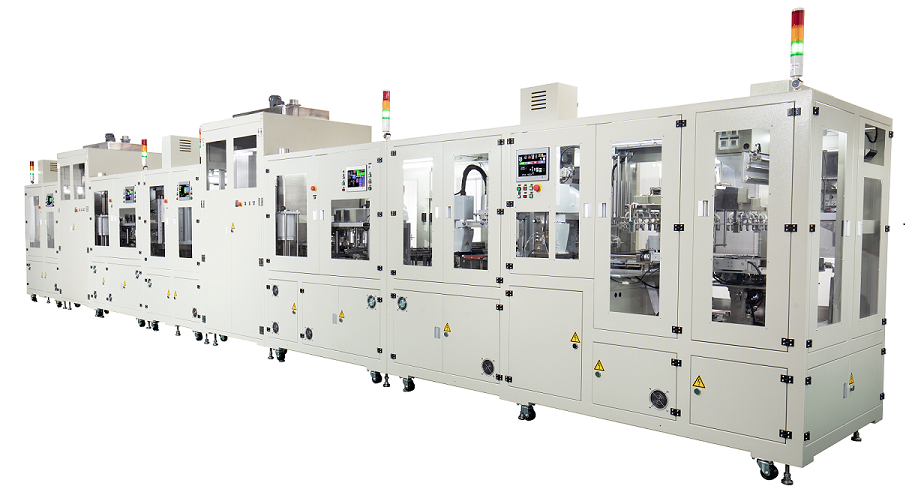
In electronics manufacturing, particularly in the production of Multilayer Ceramic Capacitors (MLCCs) and other passive components, precision and consistency in applying conductive paste are critical. Automatic dipping machines have become essential for manufacturers seeking high-quality, scalable production. This article explores how these machines work, key steps in the process, methods for measuring productivity, and highlights notable global manufacturers in this field.
How Automatic Dipping Machines Work
Automatic dipping machines are designed to deliver a controlled, uniform application of conductive paste to passive components. Components are typically loaded onto Thin Carrier Plates (TCPs) or other carriers, then transported to the dipping station. The machine immerses components in the paste while carefully controlling immersion depth, speed, and timing to ensure a consistent coating.
Additional functions may include:
Vacuum debubbling to remove trapped air bubbles
Drying stations to solidify the conductive layer before unloading
Automated handling to minimize human error and improve repeatability
This level of automation ensures that production maintains consistent quality while reducing defect rates.
Key Steps in the Dipping Process
The dipping process consists of several critical stages:
Alignment and Handling – Components are precisely positioned to guarantee repeatable dipping.
Dipping and Withdrawal – Controlled immersion ensures uniform coating thickness.
Debubbling – Air bubbles are removed to prevent defects in the conductive layer.
Drying – Components are dried before unloading to secure the conductive paste.
Each step is essential for achieving high-quality, defect-free coatings that meet industry standards.
Measuring Productivity: Beyond Simple Speed
Productivity in automatic dipping machines is measured not only by speed but also by yield, efficiency, and throughput. A simplified approach to calculate productivity:
Productivity = (Number of chips per cycle ÷ Cycle time ÷ 2 sides) × Yield rate
Number of chips per cycle – determined by chip size and TCP capacity
Cycle time – influenced by dipping speed and drying duration
Yield rate – percentage of defect-free components
Optimizing cycle time, dipping uniformity, and yield allows manufacturers to maximize overall equipment effectiveness (OEE) and achieve better production planning.
Benefits and Industrial Applications
Automatic dipping machines offer several advantages for passive component manufacturing:
Consistent Quality: Uniform coating reduces variability and improves reliability.
High Throughput: Optimized cycles support large-scale production.
Operational Efficiency: Automation minimizes labor dependency and human error.
Scalability: Machines can be scaled to accommodate growing production demands.
These benefits make them indispensable in industries such as electronics, automotive, medical devices, and consumer electronics.
Global Manufacturers of Automatic Dipping Machines
Several companies have established themselves as leaders in automatic dipping machine manufacturing:
LONG Automatic Machinery Co., Ltd. (Taiwan) LONG is known for its innovative TCP technology, improving quality and reducing costs compared to traditional JIG plates. Their LGTM-6837 model delivers high throughput for small-sized chips.
CHIPSTAR (South Korea) CHIPSTAR provides specialized dipping and coating solutions for passive components, focusing on precision and high-efficiency production.
TOKYOWELD (Japan) TOKYOWELD develops reliable dipping machines tailored for industrial-scale MLCC and passive component manufacturing.
SAMIL (South Korea) SAMIL offers automated dipping systems designed for high-volume production and consistent coating quality.
Creative Coatings (Japan) Creative Coatings produces dipping and coating machines for electronic components, emphasizing accuracy and repeatability.
Keko (Italy) Keko provides advanced automated dipping equipment for passive components, combining precision with industrial scalability.
FITO (South Korea) FITO specializes in coating and dipping systems that deliver uniform coverage and high production efficiency for passive components.
These companies represent some of the most trusted manufacturers worldwide, providing solutions that help businesses maintain competitiveness in the fast-paced electronics industry.
Conclusion
Automatic dipping machines are a cornerstone of passive component manufacturing, enabling manufacturers to achieve consistent quality, higher throughput, and operational efficiency. By understanding the principles, key steps, and productivity metrics, production managers can make informed decisions about capacity planning and equipment investments.
For more information on automatic dipping machines and to explore solutions from leading manufacturers, visit the official websites of these companies and evaluate which models best fit your production needs.
Comments Off on Global Trends in High Voltage Power Capacitors – Navigating the Current Landscape
In the rapidly evolving world of electrical infrastructure and energy systems, the high voltage power capacitor—often referred to as HV capacitor—continues to be a critical component. This blog post explores the latest global trends influencing this market, highlights key drivers and challenges, and showcases practical examples from leading solution providers, including Yuh‑Chang and Hitachi Energy.
Market Growth and Outlook
Recent market analyses consistently project robust expansion for the high voltage capacitor sector. Estimates vary—with projections ranging from USD 14.8 billion in 2024 growing to USD 33.4 billion by 2033 at a projected CAGR of 9.8%—yet all agree on the trajectory: sustained and significant growth lies ahead(Global High Voltage Capacitor Market, directindustry.com).
Key Demand Drivers
Grid Modernization & Renewable Integration Utilities worldwide are upgrading aging infrastructure to accommodate variable renewable power. HV capacitors play an essential role in voltage stabilization, reactive power compensation, and seamless integration of solar and wind energy.
Rise of HVDC and Smart Grids High Voltage Direct Current (HVDC) systems and smart grid technologies rely heavily on HV capacitors to ensure reliable, real-time power quality over long transmission distances.
Electrification & EV Infrastructure Growth in electric vehicle (EV) adoption and charging networks is generating new applications for HV capacitors—such as energy flow management and voltage regulation within charging systems.
Technological Advances Innovations in dielectric materials, compact form factors, and smart diagnostics are enhancing HV capacitor performance, reliability, and predictive maintenance capabilities.
Regional Highlights
Asia-Pacific leads in both market share and growth rate, primarily fueled by rapid urbanization, renewable energy expansion, and substantial investment in smart grid and HVDC infrastructure.
North America and Europe continue to maintain steady demand, supported by grid upgrades and policy-driven clean-energy objectives.
Challenges & Emerging Opportunities
Supply Constraints Specialized components like multilayer ceramic capacitors (MLCCs) face supply bottlenecks, potentially delaying deployment schedules.
Technical Standards Evolution As systems push toward ultra-high voltages, HV capacitors must meet stricter performance and safety criteria—requiring continuous R&D.
Sustainability and Longevity There’s increasing focus on eco-friendly materials and long-life designs, which present both regulatory challenges and opportunities for differentiation.
Real-World Examples of HV Capacitor Solutions
Hitachi Energy Another prominent player is Hitachi Energy, a global technology supplier offering an extensive portfolio—including capacitor units, capacitor banks, harmonic filters, and accessories—designed for grid operators and large industrial power consumers. Famous for their robustness and global support network, Hitachi Energy’s solutions cater to reactive power management, grid stabilization, and power quality improvement across demanding environments.
Yuh-Chang Capacitor Yuh-Chang offers a range of specialized high voltage power capacitors engineered for applications such as coupling, voltage division, and power electronics. Their product line provides tangible insight into how contemporary HV capacitor solutions are being designed and applied. Visit their site for detailed specifications and use cases: Yuh‑Chang High Voltage Power Capacitors.
Conclusion
To summarize, the global market for high voltage power capacitors or HV capacitors is poised for significant growth, driven by the dual forces of grid modernization and electrification. The expansion of renewables, HVDC systems, and smart grids raises performance expectations, but innovation in materials and system intelligence is keeping pace. Leading solutions—from Yuh-Chang to Hitachi Energy—offer a glimpse of how this landscape is evolving. Whether you’re a grid planner, renewable project developer, or industrial systems engineer, understanding these trends is essential moving forward.
Comments Off on Terminal Dipping Machine Global Regional Major Market Distribution and Trends
Introduction
The terminal dipping machine market is an integral segment of the industrial machinery sector, playing a crucial role in enhancing the efficiency and quality of various manufacturing processes. This report provides an in-depth analysis of the global distribution and trends within the terminal dipping machine market, focusing on regional markets and emerging trends. The analysis draws from multiple reliable sources to present a comprehensive overview of the market landscape as of 2025.
Global Market Overview
The global terminal dipping machine market is experiencing significant growth, driven by technological advancements and increasing demand for automation in manufacturing processes. The market’s expansion is fueled by the need for high-quality finishes and efficient production methods across various industries, including automotive, electronics, and food processing (Verified Market Reports).
Market Size and Growth
As of 2023, the global market for dipping machines was valued at approximately $2.5 billion and is projected to grow at a compound annual growth rate (CAGR) of 5.2% from 2023 to 2030 (Verified Market Reports). This growth is attributed to the increasing adoption of automation and the demand for precision in manufacturing processes. The market is expected to reach USD 2.5 billion by 2033, with a CAGR of 9.2% from 2026 to 2033 (LinkedIn).
Regional Market Distribution
North America
North America is experiencing steady growth in the terminal dipping machine market, driven by government initiatives and increasing consumer awareness. The region’s market is characterized by a strong focus on technological innovation and sustainability, which are key drivers of growth (Global Info Research).
Europe
Similar to North America, Europe is witnessing steady growth in the terminal dipping machine market. The region’s market is supported by robust industrial infrastructure and a strong emphasis on sustainable manufacturing practices. European manufacturers are increasingly adopting automated and sophisticated dipping machines to enhance production efficiency and product quality (Global Info Research).
Asia-Pacific
The Asia-Pacific region, particularly China, leads the global terminal dipping machine market. This leadership is attributed to robust domestic demand, supportive government policies, and a strong manufacturing base. The region’s market is characterized by rapid industrialization and a growing emphasis on automation and precision in manufacturing processes (Global Info Research).
Latin America and Middle East & Africa
Latin America and the Middle East & Africa regions are also experiencing growth in the terminal dipping machine market, albeit at a slower pace compared to other regions. The growth in these regions is driven by increasing industrialization and the adoption of modern manufacturing techniques (Global Info Research).
Comments Off on Future Trends in RF Filter Technology: Materials, Miniaturization, and Performance
The world of wireless communication is a symphony of signals, each vying for clarity amidst a cacophony of frequencies. At the heart of this orchestration lies the RF filter—an unsung hero ensuring harmony. As we march into an era dominated by 5G, IoT, and beyond, RF filters are undergoing a renaissance, driven by the need for miniaturization, material innovation, and enhanced performance.
Among the leaders shaping this transformation is **Temwell**, a renowned Taiwanese RF Filter Manufacturer. Known for their cutting-edge SAW Filters, Cavity Filters, and an extensive range of RF components like RF Diplexersand Duplexers, Temwell has established itself as a cornerstone in the industry. Their commitment to precision engineering and innovation ensures that their products not only meet but exceed the demands of modern communication systems, making them an indispensable partner for businesses navigating the future of wireless technology.
Miniaturization: Shrinking Giants
Devices are getting smaller. So are their components. RF filters, once bulky, are now being reimagined to fit into the tiniest of spaces without compromising functionality. Techniques like integrating filters into System-on-Chip (SoC) designs are becoming mainstream, reducing the need for discrete components. For instance, acoustic wave filters, leveraging piezoelectric substrates like Lithium Tantalate, have revolutionized miniaturization by operating at gigahertz frequencies with micron-scale wavelengths. This trend is not just about size—it’s about making every millimeter count in devices like smartphones and wearables.
Material Innovations: The Building Blocks of Tomorrow
The choice of materials is pivotal. Gallium Nitride (GaN) and Low-Temperature Co-fired Ceramics (LTCC) are leading the charge, offering superior thermal stability and power handling. Meanwhile, the advent of metamaterials—engineered to manipulate electromagnetic waves—promises filters with unparalleled precision and compactness. These materials are not just improving performance; they’re redefining what’s possible, especially in high-frequency applications like 5G and satellite communications.
Performance Enhancements: Beyond the Basics
Performance isn’t just about doing the job—it’s about doing it exceptionally well. Modern RF filters are focusing on reducing signal loss (insertion loss) while maintaining high selectivity. This is crucial for applications like satellite communications, where even minor losses can have significant repercussions. Innovations like tunable filters, which adapt dynamically to different frequency bands, are simplifying designs and enhancing functionality. Imagine a single filter seamlessly switching between 5G, Wi-Fi, and satellite frequencies—this is the future.
Comments Off on Nvidia Emerges as Focal Point of CES 2025, Overshadowing Intel, AMD, and Others
The Consumer Electronics Show (CES) 2025 was a significant event in the tech industry, showcasing the latest advancements and innovations. Among the numerous companies presenting at the event, Nvidia emerged as the focal point, overshadowing other tech giants such as Intel and AMD. This report delves into the reasons behind Nvidia’s dominance at CES 2025, highlighting the company’s strategic announcements, technological advancements, and market positioning.
Introduction
CES 2025, held in Las Vegas, was a platform for tech companies to unveil their latest products and innovations. Nvidia, a leading player in the semiconductor and AI industry, captured the spotlight with its groundbreaking announcements and strategic vision. The company’s CEO, Jensen Huang, delivered a keynote address that drew a large audience, making it one of the most attended sessions at the event (References:Chen & Hsiao, 2025).