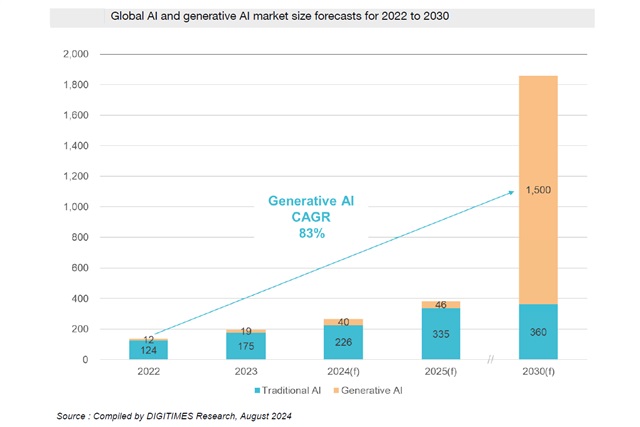
14 JanGenerative AI market to reach US$1.5 trillion by 2030 with Taiwan holds hardware advantage; software and services to see promising future, says DIGITIMES Research

2_b

Introduction

The generative AI market is experiencing unprecedented growth, with projections indicating that it will reach a staggering US$1.5 trillion by 2030. This rapid expansion is driven by technological advancements and increasing adoption across various industries. Taiwan, in particular, is poised to play a significant role in this burgeoning market, leveraging its robust hardware capabilities. Meanwhile, the software and services sectors are expected to see substantial growth, offering promising opportunities for future development (References:DIGITIMES Research, 2024).

Read more…

Share

23 DecSemiconductor Industry Trends in 2025

 01

Introduction

The semiconductor industry is poised for a transformative year in 2025, driven by advancements in artificial intelligence (AI), high-performance computing (HPC), and the demand for more efficient and sustainable technologies. This report delves into the key trends shaping the semiconductor landscape, highlighting innovations in packaging technologies, supply chain dynamics, and market growth projections. The insights are drawn from a variety of reliable sources to provide a comprehensive overview of the industry’s trajectory.

Advanced Packaging Technologies

Advanced packaging technologies are at the forefront of the semiconductor industry’s evolution. As the demand for AI-powered applications and high-performance computing grows, innovations in packaging are becoming critical for enhancing performance and efficiency. Key technologies include interposers, chiplets, and fan-out panel-level packaging (FO-PLP) (TechInsights).

Interposers are particularly significant for AI and data centers, where the need for processors paired with high-bandwidth memory (HBM) is increasing. Companies like SK Hynix are exploring cost-reduction methods through direct stacking techniques and substrate innovation (TechInsights). FO-PLP offers increased area utilization and cost efficiency over traditional wafer-level packaging, with companies like Samsung and NVIDIA adopting this technology for next-generation AI chips (TechInsights).

Read more…

Share

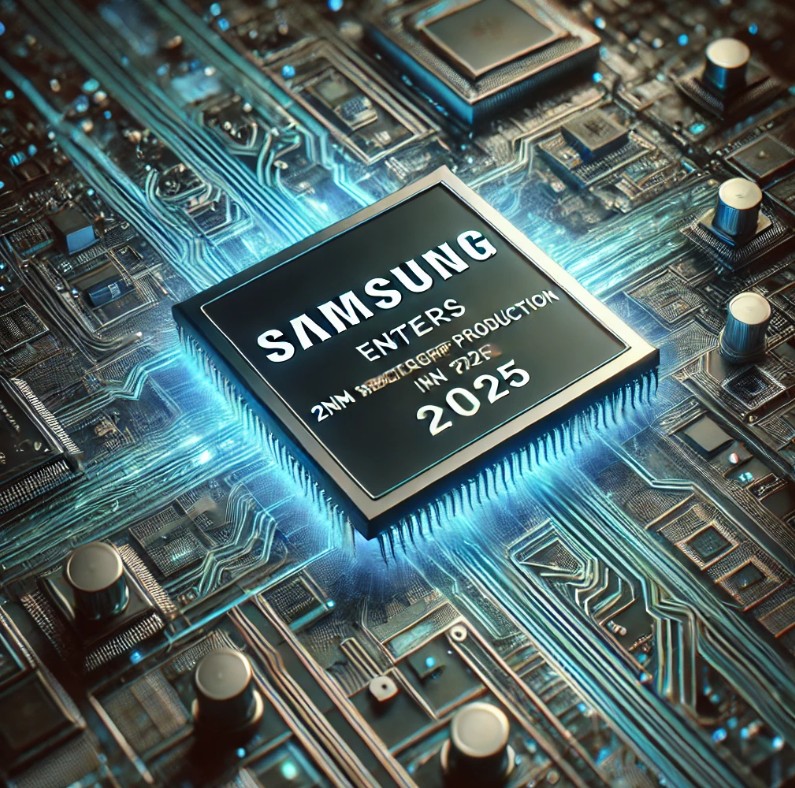
17 DecSamsung to Enter 2nm Production in 2025, Challenging TSMC

00

Introduction

The semiconductor industry is on the brink of a significant technological advancement as Samsung Electronics and Taiwan Semiconductor Manufacturing Company (TSMC) prepare to enter mass production of 2nm technology in 2025. This development marks a pivotal moment in the ongoing competition between these two industry giants, with both companies vying for leadership in the advanced chip manufacturing sector. This report delves into the details surrounding Samsung’s entry into 2nm production, its implications for the semiconductor industry, and the challenges it poses to TSMC’s dominance.

Background

The Semiconductor Landscape

The semiconductor industry is a cornerstone of modern technology, underpinning advancements in artificial intelligence (AI), high-performance computing, and mobile devices. As the demand for more powerful and efficient chips grows, manufacturers are pushed to develop smaller, more advanced process nodes. The transition from 3nm to 2nm technology represents a significant leap in this ongoing evolution, promising improvements in power efficiency, performance, and chip area reduction (TechHQ).

TSMC’s Dominance

TSMC has long been the leader in semiconductor manufacturing, holding over 60% of the market share in the foundry business. Its dominance is largely attributed to its technological advancements and strategic partnerships with major clients like Apple and NVIDIA. TSMC’s early entry into 2nm production and its existing client relationships position it as the frontrunner in this technological race (Digitimes).

Read more…

Share

03 DecTrump’s promised tariffs: Which companies might be affected?

Synopsis
Trump announced tariffs on major trading partners, including Mexico. Many automakers like Honda, Nissan, and Toyota have plants in Mexico. These companies export a large portion of their Mexican production to the US. Other companies like Foxconn and Lenovo also have significant operations in Mexico. Some companies are considering their options in response to the potential tariffs.
123
President-elect Donald Trump on Monday pledged tariffs on the United States’ three largest trading partners – Canada, Mexico and China – detailing how he will implement campaign promises that could trigger trade wars. Here are companies with a manufacturing presence in Mexico.

ASIAN AUTOMAKERS

Honda Motor sends 80% of its production in Mexico to the U.S. market and its chief operating officer Shinji Aoyama warned earlier this month if the U.S. were to impose permanent tariffs on vehicles imported from Mexico, it would have to think about shifting production.

Nissan Motor has two plants in Mexico where it makes the Sentra, Versa and Kicks models for the U.S. market. It produced nearly 505,000 vehicles in Mexico in the first nine months of this year. The company does not disclose how many of those were exported to the U.S. market.

Toyota Motor has a smaller footprint in Mexico, making its Tacoma pick-up truck at two plants there.

Read more…

Share

20 NovFuture Trends in Semiconductor Dipping Machines and Their Impact on the Industry

The semiconductor industry is the cornerstone of modern technology, powering everything from smartphones to advanced AI systems. Within this critical sector, semiconductor dipping machines play a pivotal role in ensuring the precise coating and processing of microchips. As the industry evolves, new trends in dipping technology are poised to reshape manufacturing processes, enhance productivity, and ensure higher quality standards. This blog explores future trends in semiconductor dipping machines and their potential impact on the industry.

Read more…

Share

21 OctHow to Reset a Marine Circuit Breaker: A Comprehensive Guide

Marine circuit breakers are critical components in a boat’s electrical system, providing protection against overcurrent and short circuits. Resetting a marine circuit breaker is a straightforward process, but it requires understanding the underlying causes of tripping and ensuring that the system is safe to operate. This report will provide a detailed guide on how to reset a marine circuit breaker, including troubleshooting steps and preventive measures to avoid future issues.

Read more…

Share

12 JulThe Introduction of the Different Types Coil Winding Machine

Due to the different functional requirements of various coil products, the types of winding machines are also diversified. At present, the usual winding machines include automatic winding machines, semi-automatic winding machines, circular winding machines, servo precision winding machines, and transformer winding machines.

The semi-automatic winding machine is currently the most widely used model, also known as the CNC automatic winding machine, applicable for automatic winding solutions for one-time coils or small batches of coils. This type of winding machine has high efficiency, convenient maintenance, and high-cost performance. However, one machine must be equipped with an operator, which is more labor-intensive.

The servo precision winding machine is the most advanced and powerful model at present, a PLC system with extremely high computing power. The high-resolution servo motor can ensure the stability of the equipment operating at high or low speeds. It with functions such as automatic calculation, automatic discrimination, error correction, etc.

A transformer winding machine is a relatively common model. The structure is divided into horizontal and vertical. Modern models are able to automatic wiring. New models are also functional and have replaced the traditionally cumbersome process of manual beating and shaping, making the winding process of the transformer easier.

Share

25 MayThe Introduction of RF Filter and Application

What The Radio Frequency Filters Is?

An important component in wireless technology, RF filters are used with the radio receivers so that only the right kind of frequencies can be entertained while filtering out other unwanted bands of frequencies. RF filter is a device that transmits or rejects signals according to the frequency.

The RF filters are designed in a way that they could easily operate on frequency ranges that range from medium to extremely high frequency, i.e. megahertz and gigahertz. Because of its operating characteristic, it is most frequently used in equipment such as broadcast radio, wireless communications, and television, etc.

Read more…

Share

26 DecThe Effects of Hard Water on Reverse Osmosis Filtration Systems

Reverse osmosis (RO) can be one of the best ways to treat water for residential and light commercial facilities. But, there can be issues that exist after a RO unit is installed. One issue that arises is the challenges presented with hard water. During the filtration process, hard water can cause scale, making it extremely difficult for RO’s membrane to work and the result is lower quality of water.


Hard water is the result of having high mineral content, usually calcium and magnesium ions. The dissolved rock causes scale, which has been found to impede appliance performance and result in energy inefficiencies and increased utility costs.


“Hardness can cause scaling of the membrane, which over time will defeat the whole purpose,” explains Steve Fox of NEXT Filtration Technologies Inc. “It will reduce the output of the membrane itself and it will reduce the quality of water that the membrane is putting out. Essentially, it slowly kills the membrane.”


Replacing membranes too frequently can be expensive over time. Dealers should, therefore, seek the foundation of the issue for answers. Also, sharing this valuable information with customers is key.


According to Pam McDowell of Scalewatcher, it’s the sticky calcium molecules that affect a RO system. “Calcium in the water is like cholesterol in your blood stream,” notes McDowell. “It sticks to everything, binds, hardens and thickens as more collects. On a RO membrane, the calcium molecules block the membrane, making backwashing necessary on a regular basis.”


While McDowell goes on to say that it is necessary to replace the membranes of an RO system from time-to-time, it’s the dealer’s job to provide customers with a system that will last as long as possible.


How to Reduce Water Hardness Before RO


Testing is the best way to deal with water hardness before installation. RO systems are designed to create a lot of pressure to a certain solution to separate out heavy minerals. Knowing what types of minerals are in the water can help when installing a system.


“As with any water treatment system, following the manufacturer’s installation is the most important part of the installation,” notes McDowell. “The second important part knows your water. If you know that you have a specific issue such as iron, an iron filtration system should be installed in tandem with the RO.”


After installation, it’s always best to continue to monitor the water to make sure scaling isn’t becoming a major problem in the RO system. If you are changing the membranes of your RO system quite frequently, McDowell suggest that it may be time to find another system and/or hardness solution.


“Carbon filters may be used to remove chlorine, which can have a negative effect on TFC (thin film composite) and TFM (thin film material) membranes,” notes Jan de Baat Doelman, president of Scalewatcher. “Carbon pre filters are not used if the RO system contains a CTA (cellulose tri-acetate) membrane.”


Ion exchange is commonly used to soften water. During ion exchange, hard water is passed through a cylinder filled with resin beads that have been saturated with sodium. When this happens, the hardness ions are attracted to the resin and the sodium ions are released.


Fox adds that softening and ion exchange are used for the removal of hardness ions and that RO can be effective as well, but not if you’re trying to protect its membrane.


Going Green

One of the major downfalls of having hard water and its effects on a reverse osmosis system is that it is not very energy efficient. The minerals that clog the RO and cause scaling make the RO unit work even harder, waste water and run up the utility bill. There are ways to prevent this from happening and in return help the environment.


“The amount of water that’s wasted, the discharge issues that we’re facing all over this country and really all over the world have become serious enough that the water treatment industry is paying attention to the need to reduce discharge, save water and be more environmentally friendly,” asserts Fox. “I would like to see more of a focus on the need to become more efficient on the waste specifically — hopefully eliminating any chemical discharge in the widespread use of reverse osmosis.”


There is little doubt that RO has been an effective filtration technology for several decades. While it does have its waste and energy drawbacks, there are fewer more efficient and practical innovations available at this time for residential and light commercial use. As companies continue to go green with solutions for hard water and scale reduction, the focus will become more conscious of end users, the environment and the bottom line.


If you need more information about RO system or the reliable supplier of reverse osmosis system, visit the website of TRIWIN that would be a good choice. The company provides best quality water filtration systems for you to enjoy pure water. For more details, welcome to click here: www.triwinwater.com to gain the information you need.


Article Source: https://www.watertechonline.com/the-effects-of-hard-water-on-reverse-osmosis-filtration-systems/

Share

29 NovThe Basics of LED Lighting and The Recommendable Taiwan LED Lamp Manufacturer

What Are LED Bulbs And How Do They Work?


LED stands for light emitting diode. LED lighting products produce light approximately 90% more efficiently than incandescent light bulbs. How do they work? An electrical current passes through a microchip, which illuminates the tiny light sources we call LEDs and the result is visible light. To prevent performance issues, the heat LEDs produce is absorbed into a heat sink.


Lifetime of LED Bulbs


The useful life of LED lighting products is defined differently than that of other light sources, such as incandescent or compact fluorescent lighting (CFL). LEDs typically do not “burn out” or fail. Instead, they experience ‘lumen depreciation’, wherein the brightness of the LED dims slowly over time. Unlike incandescent bulbs, LED “lifetime” is established on a prediction of when the light output decreases by 30 percent.


How is LEDs Used in Lighting?


LEDs are incorporated into bulbs and fixtures for general lighting applications. Small in size, LEDs provide unique design opportunities. Some LED bulb solutions may physically resemble familiar light bulbs and better match the appearance of traditional light bulbs. Some LED light fixtures may have LEDs built in as a permanent light source. There are also hybrid approaches where a non-traditional “bulb” or replaceable light source format is used and specially designed for a unique fixture. LEDs offer a tremendous opportunity for innovation in lighting form factors and fit a wider breadth of applications than traditional lighting technologies.


LEDs and Heat


LEDs use heat sinks to absorb the heat produced by the LED and dissipate it into the surrounding environment. This keeps LEDs from overheating and burning out. Thermal management is generally the single most important factor in the successful performance of an LED over its lifetime. The higher the temperature at which the LEDs are operated, the more quickly the light will degrade, and the shorter the useful life will be.


LED products use a variety of unique heat sink designs and configurations to manage heat. Today, advancements in materials have allowed manufacturers to design LED bulbs that match the shapes and sizes of traditional incandescent bulbs. Regardless of the heat sink design, all LED products that have earned the ENERGY STAR have been tested to ensure that they properly manage the heat so that the light output is properly maintained through the end of its rated life.


How is LED lighting different than other light sources, such as incandescent and Compact Fluorescent (CFL)?


LED lighting differs from incandescent and fluorescent in several ways. When designed well, LED lighting is more efficient, versatile, and lasts longer.


LEDs are “directional” light sources, which mean they emit light in a specific direction, unlike incandescent and CFL, which emit light and heat in all directions. That means LEDs are able to use light and energy more efficiently in a multitude of applications. However, it also means that sophisticated engineering is needed to produce an LED light bulb that shines light in every direction.


Common LED colors include amber, red, green, and blue. To produce white light, different color LEDs are combined or covered with a phosphor material that converts the color of the light to a familiar “white” light used in homes. Phosphor is a yellowish material that covers some LEDs. Colored LEDs are widely used as signal lights and indicator lights, like the power button on a computer.


In a CFL, an electric current flows between electrodes at each end of a tube containing gases. This reaction produces ultraviolet (UV) light and heat. The UV light is transformed into visible light when it strikes a phosphor coating on the inside of the bulb. Learn more about CFLs.


Incandescent bulbs produce light using electricity to heat a metal filament until it becomes “white” hot or is said to incandesce. As a result, incandescent bulbs release 90% of their energy as heat.


If you have any interest in LED lamp manufacturer, try to check out the website of Daina Electronics Co., Ltd... They provide a variety of LED lights like multi-color LED, oval LED, rectangular LED, round LED, SMD LEDs, super bright LED lights, super flux LED, tape LED etc. More details, click here: www.daina-led.com to obtain the information you need.


Article Source: https://www.energystar.gov/products/lighting_fans/light_bulbs/learn_about_led_bulbs

Share