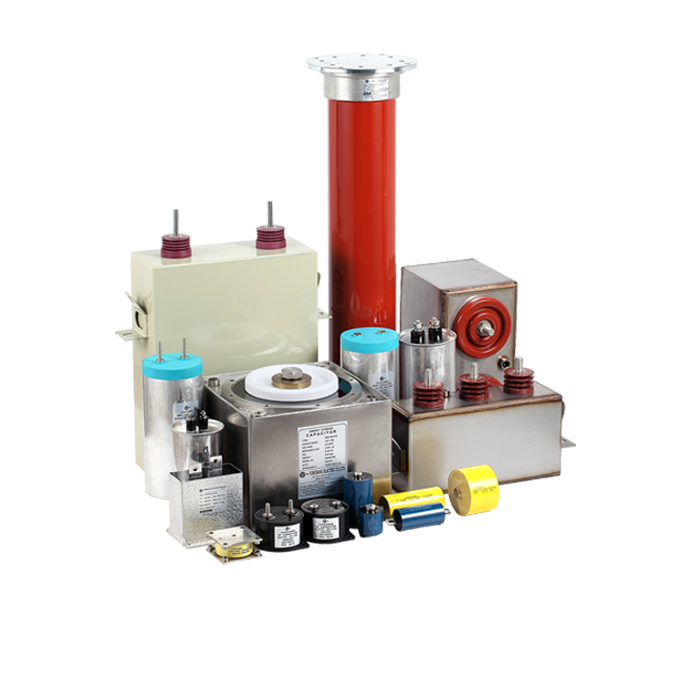
The world of industrial electromechanical systems is undergoing a profound transformation, driven by digitalization, sustainability mandates, and the relentless pursuit of operational excellence. At the core of this transformation are the fundamental power components that make these systems function. Power capacitors, long considered mature and stable commodities, are now at the center of a quiet technological revolution. For system designers, plant engineers, and technical procurement officers, understanding these shifts is no longer optional—it’s critical to specifying systems that are efficient, reliable, and future-proof.
This analysis moves beyond market dynamics to explore the key technological trends redefining power capacitors for industrial applications. We examine the innovations in materials, design, and intelligence that are enabling capacitors to meet the demands of next-generation smart factories, renewable energy grids, and advanced motor drive systems.
Trend 1: The Drive for Higher Density and Extended Lifespan
The pressure on industrial infrastructure to do more in less space with greater reliability is translating directly into capacitor design requirements.
- Advanced Dielectric Materials: While metallized polypropylene film remains the industry workhorse for power applications, significant R&D is focused on enhancing its properties. Innovations include:
- Hybrid Dielectrics: Combining different dielectric materials or using advanced nanoscale coatings to achieve a superior balance of high dielectric strength, low losses, and improved self-healing characteristics.
- High-Temperature Films: Development of films that maintain stability and longevity at sustained temperatures of 105°C, 115°C, and even 125°C. This is crucial for capacitors in sealed enclosures or in proximity to other heat-generating components like IGBTs in drives.
- Design for 200,000+ Hour Service Life: Leading manufacturers are pushing the boundaries of predicted service life. This is achieved through:
- Precision Winding and Impregnation: Advanced, vacuum-pressure impregnation processes ensure complete elimination of air pockets and uniform dielectric fluid distribution, drastically reducing partial discharge and the risk of premature failure.
- Robust Dry Technology: The shift towards “dry” capacitor technology—using gas or solid impregnants instead of liquid—eliminates the risk of leakage, simplifies disposal, and enhances safety, making them ideal for sensitive or hard-to-service environments.
Trend 2: Intelligence and Condition Monitoring
The era of the “dumb” capacitor is ending. The integration of Industry 4.0 principles is bringing intelligence directly to the capacitor bank.
- Smart Capacitors with Embedded Sensors: Next-generation units are being equipped with sensors that monitor internal temperature, case strain, and electrical parameters in real-time. This data is vital for moving from preventive to predictive maintenance.
- Communication Protocols: These smart capacitors can communicate via standard industrial protocols (e.g., Modbus TCP, PROFINET, IEC 61850), feeding data directly into the facility’s SCADA or Plant Asset Management system. This allows for:
- Early warning of derating or impending failure.
- Optimization of switching cycles to maximize efficiency and component life.
- Simplified diagnostics and reduced downtime during troubleshooting.
The table below contrasts the capabilities of traditional versus smart, connected capacitor solutions.
| Aspect | Traditional Capacitor Bank | Smart, Connected Capacitor System |
|---|---|---|
| Health Monitoring | Periodic manual inspection, IR thermography, or failure-based. | Continuous, real-time monitoring of temperature, voltage, current, and capacitance. |
| Maintenance Strategy | Preventive (scheduled) or reactive (upon failure). | Predictive & Condition-Based. Maintenance is performed when data indicates a need. |
| System Integration | Operates as a standalone component. Minimal data feedback. | Fully integrated into plant networks. Provides operational and health data to control systems. |
| Primary Value | Cost of component, basic function (PFC). | Reduced downtime, optimized performance, lower total cost of ownership (TCO). |
Trend 3: Specialization for Demanding Applications
As application environments become more extreme, capacitors are being specifically engineered to meet unique challenges.
- Capacitors for Harsh Environments: This includes designs with:
- Corrosion-Resistant Coatings and Housings: For offshore wind installations, chemical plants, or coastal facilities with high salt mist.
- Enhanced Vibration and Shock Resistance: Critical for capacitors used in mining equipment, traction applications (rail), or heavy mobile machinery.
- High dV/dt and Peak Current Capability: The rise of wide-bandgap semiconductors (SiC and GaN) in power electronics enables faster switching frequencies and higher efficiencies. However, this places immense stress on DC-link and snubber capacitors, which must now handle extremely high rates of voltage change (dV/dt) and surge currents without degradation.
The Competitive Landscape: Who is Leading the Innovation Charge?
Different players in the market are approaching these technological trends from varied strategic positions.
- Global Material & Component Science Leaders (e.g., TDK, Panasonic): These companies leverage their deep expertise in fundamental materials science to drive innovation in dielectric films and advanced metallization techniques. Their strength lies in developing the next-generation core materials that will define future capacitor performance limits.
- Specialized Power Quality Innovators: This group, which includes companies like Yuhchang Electric, ICAR, and Electronicon, focuses on application-led innovation. Their R&D is closely tied to solving specific field problems:
- They are often among the first to industrialize new materials into robust, field-ready products for harsh industrial settings.
- They excel at system-level design, creating intelligent capacitor banks with integrated protection, control, and monitoring tailored for complex power quality applications like active harmonic filtering.
- Volume Manufacturers: While crucial for the economy segment, these players are typically fast followers in technology. They adopt proven innovations once they become standardized and cost-effective to manufacture at scale.
Strategic Implications for Procurement and Design
For technical buyers and engineers, these trends necessitate a shift in evaluation criteria.
- Specify for the Future, Not Just the Present: When designing a new system, consider specifying capacitors with higher temperature ratings or communication-ready capabilities even if not immediately needed. This provides headroom for future expansion or upgrades.
- Evaluate the Total Ecosystem: The value of a smart capacitor lies in its data and connectivity. Assess the supplier’s software support, protocol compatibility, and ease of integration with your chosen control architecture.
- Partner with Innovators: For mission-critical or cutting-edge applications, engaging with specialized innovators can provide access to the latest technology and co-development opportunities. Their focused expertise can de-risk projects that push performance boundaries.
Conclusion: Technology as the Ultimate Differentiator
In the industrial power capacitor market, competition is increasingly defined by technological prowess rather than price alone. The trends toward higher density, intelligence, and application-specific ruggedness are creating a clear divergence between basic commodity components and advanced, value-engineering solutions.
Suppliers who invest in deep R&D and maintain close collaboration with end-users in sectors like renewable energy, heavy industry, and smart infrastructure are best positioned to lead. They transform the capacitor from a passive cost item into an active contributor to system resilience, efficiency, and intelligence.
For the industry professional, staying informed on these technological currents is essential. The choices made today in component selection will directly determine the performance, maintainability, and longevity of industrial systems for the next decade and beyond.
