As industries worldwide grapple with the dual challenges of environmental sustainability and operational efficiency, the demand for smarter, greener technologies has never been more pressing. In the realm of air purification, this translates into a critical need for dust collection systems that are not only highly effective but also energy-efficient, quiet, and compact. This article explores a pioneering approach to achieving these goals through the strategic development of custom Brushless DC (BLDC) motors, setting a new benchmark for sustainable innovation in industrial applications.
The Green Imperative: Reimagining Dust Collection for a Sustainable Future
Traditional dust collectors often come with a significant environmental footprint—characterized by high energy consumption, considerable noise pollution, and bulky designs that demand substantial material resources. The path to a sustainable future requires a fundamental shift in design philosophy. Our focus here is on a transformative methodology that prioritizes environmental responsibility and resource optimization from the outset: the “Motor-Outward” design approach.
Instead of fitting a fan and housing around a pre-existing motor, this innovative strategy begins by identifying the optimal aerodynamic performance required for the application. A custom BLDC motor is then meticulously engineered to deliver precisely this performance, ensuring maximum efficiency and minimal waste. The entire system—from the airflow path to the housing—is then designed holistically around this bespoke motor, creating a perfectly integrated and optimized solution.
Intelligence Meets Efficiency: The Smart BLDC Advantage
The integration of smart technology is paramount in modern eco-friendly systems. The latest generation of dust collectors, powered by custom BLDC motors, incorporates advanced smart controllers that offer unparalleled operational intelligence. These systems can dynamically adjust fan speeds in real-time, responding to critical environmental parameters such as PM2.5 concentration levels and the clogging status of filters. This adaptive control not only maintains optimal air purification efficiency but also significantly reduces energy consumption and extends the lifespan of consumables, aligning perfectly with sustainable operational practices.
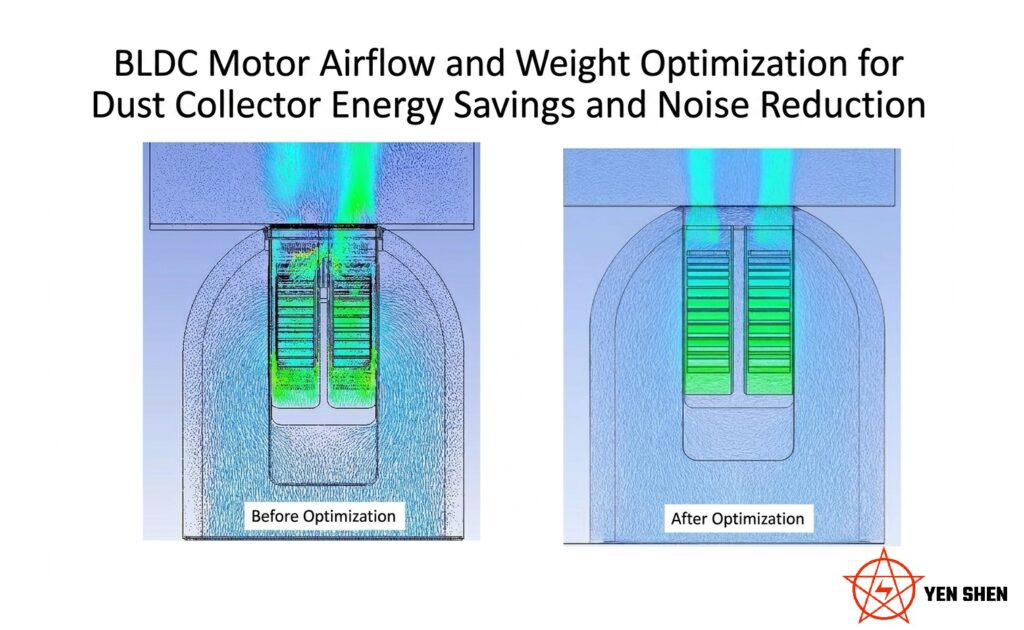
Furthermore, the physical design benefits from cutting-edge engineering. Utilizing computer-aided airflow simulations and structural optimization, coupled with precision manufacturing techniques like plastic injection molding, allows for the creation of incredibly compact and lightweight units. This reduction in material usage and improved portability contributes directly to a lower carbon footprint throughout the product lifecycle.
Quantifiable Impact: A Leap Towards Eco-Efficiency
The adoption of this integrated, custom BLDC motor approach has yielded remarkable and quantifiable results in a recent smart dust collector project:
| Performance Indicator | Sustainable Impact |
| Energy Consumption | 45% Reduction (Significant operational cost savings and lower carbon emissions) |
| Noise Level | 30% Reduction (Improved working environments and reduced acoustic pollution) |
| Weight | 30% Reduction (Enhanced portability, reduced shipping emissions, and easier installation) |
| Volume | 15% Reduction (Smaller footprint, optimized material use) |
| Intake Speed | 15% Increase (Faster and more effective air purification) |
| Airflow Output | 5% Increase (Improved overall system performance) |
These figures underscore the profound impact of combining intelligent design with advanced motor technology, delivering not just performance enhancements but also substantial environmental benefits.
Precision Engineering for Peak Sustainability
Beyond the motor itself, the redesign of critical components like impellers and ducts plays a vital role in achieving peak sustainability. By employing advanced computational fluid dynamics (CFD) simulations, engineers can eliminate inefficiencies inherent in traditional designs, such as turbulent airflow and recirculation. This precision engineering ensures optimal aerodynamic flow, leading to quieter operation, reduced energy loss, and balanced dual-impeller output without mutual interference. The result is a system that operates at its most efficient, minimizing energy waste and maximizing air purification effectiveness.
Conclusion: Paving the Way for a Greener Industrial Future
The strategic development of custom BLDC motors, guided by a “Motor-Outward” design philosophy and integrated with smart controls, represents a powerful paradigm for sustainable innovation. It demonstrates that high performance and environmental responsibility are not mutually exclusive but can be achieved through thoughtful engineering and a commitment to holistic design. As industries continue to evolve, embracing such advanced motor technologies will be crucial in building a future where industrial processes are not only efficient and productive but also inherently green and sustainable.
References:
[1] Success Story 2 | YEN POWER:
