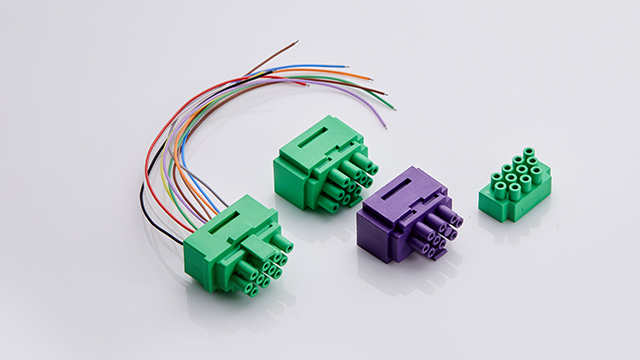
In the evolving medical-device landscape, the performance of connectors often receives less attention than the headline functions of imaging systems, monitors or therapy devices. Yet connectors are a critical interface—and failures can derail an entire system. This article presents a neutral overview of three major challenge categories for medical connectors, examines how leading manufacturers are responding, and provides procurement-oriented guidance for device-owners and engineering teams.
Three Core Challenge Areas
Contact Degradation and Signal Integrity
Connectors are designed to provide stable electrical and/or signal transmission. In a medical environment, however, multiple factors threaten that stability: mating/un-mating cycles, micro-motion or vibration, surface corrosion and wear of contact coatings. A research paper states that major failure mechanisms include fretting wear, coating wear-through, contact-force relaxation and corrosion.
Contact resistance drift is a key symptom: as resistance rises, heat generation increases, signal integrity worsens, and reliability drops. When procuring, ask for: contact resistance before vs after X cycles, data on coating durability, specification of mating cycles.
Sterilisation, Cleaning and Environmental Stress
Medical connectors often operate in harsh cleaning/sterilisation regimes: steam, EtO, chemical disinfectants, repeated exposure to humidity, temperature cycling and fluids. According to industry commentary, sterilization compatibility is a must for medical connectors exposed to patient/environmental zones. (Connector and Cable Assembly Supplier)
Purchasers should seek: validated cleaning/sterilisation cycle data, fluid-ingress test results, material compatibility statements for cleaning agents, and sealing/over-moulding design details.
Mechanical Load, Handling, Cable Stress
In many applications—especially portable/wearable devices—connectors must tolerate repeated connection/disconnection, cable pull forces, drop impacts, vibration and torsion. One article summarises that connectors in harsh environments fail more often due to repeated use and physical stress. (amphenolalden.com)
From a procurement perspective: review cable-strain relief, retention/pull-force specs, drop-test data, and ensure the connector design integrates appropriately with the device’s mechanical demands.
Market Response – Key Players & Solutions
Several manufacturers are defining the state-of-the-art in medical-connector reliability. For illustration:
- Molex offers medical connectors described as “ultra-compact footprints, exceptional signal integrity and robust power-handling … maintain integrity through rigorous mating and sterilization cycles.” (molex.com)
- TE Connectivity supplies surgical-grade medical connectors with high-pin-count, ZIF and fine-pitch options, rated for thousands of mating cycles. (te.com)
- Amphenol Alden Products specialises in high-reliability medical cable-assemblies and connectors, collaborating early in design with device OEMs. (amphenolalden.com)
- LEMO provides connectors trusted in critical medical applications worldwide, emphasising durability, regulatory compliance and innovation. (lemo.com)
- And of course, Cambus Corporation remains a key player to watch, with its focus on high-reliability medical connectors. (cambus-tw.com)
Below is a comparison table of typical design/testing criteria in this sector:
| Criterion | Typical Specification Range | Why It Matters |
|---|---|---|
| Mating Cycles | 1 000 to 100 000+ | Indicates how many times connector can mate/un-mate |
| Contact Resistance | < 10 mΩ (initial), rise limited over life | Low resistance ensures signal/power integrity |
| Pull/Retention Force | Specified in N (10-100 N) | Ensures cable won’t detach under use |
| Sterilisation Cycles | 1 000+ cycles at defined method | Validates long-term exposure to cleaning/sterilisation |
| Environmental Tests | Temp/humidity, salt-spray, vibration | Ensures lifetime reliability under real-world stress |
This table gives you a guide for comparing offerings from different connector suppliers.
Procurement Guidance – What to Ask and Consider
When selecting medical connectors for a device or system, consider the following checklist:
- Material & plating details (e.g., base metal, gold/palladium plating thickness)
- Mating cycle test data — including degraded contact resistance over cycles
- Sterilisation/cleaning compatibility reports — specific to your facility’s methods
- Mechanical stress qualification — pull/strain, drop, vibration data
- Environmental aging & corrosion data — how the connector behaves after exposure
- Traceability & quality system proof — e.g., ISO 13485 compliance, batch traceability
- Service-lifetime prediction or accelerated-life testing results — useful for long-life devices
Long-Term Reliability: The Hidden Complexity
Understanding connector reliability is non-trivial. A recent engineering study notes that modelling connector lifetime is challenging because of multiple interacting failure modes (wear, corrosion, contact-force loss, thermal/mechanical cycling). arXiv
Accordingly, relying solely on simple spec sheets is insufficient. Suppliers able to provide detailed accelerated life testing, field-data and clear test-protocols provide more reliable assurances.
Final Thoughts
Medical connectors may seem like a straightforward component—but in truth they operate at the interface of electrical, mechanical and environmental challenges. By zeroing in on contact integrity, sterilisation resilience and mechanical durability, and by selecting suppliers who provide validated data and traceable processes, procurement teams and equipment owners can significantly reduce risk.
