In electronics manufacturing, particularly in the production of Multilayer Ceramic Capacitors (MLCCs) and other passive components, precision and consistency in applying conductive paste are critical. Automatic dipping machines have become essential for manufacturers seeking high-quality, scalable production. This article explores how these machines work, key steps in the process, methods for measuring productivity, and highlights notable global manufacturers in this field.
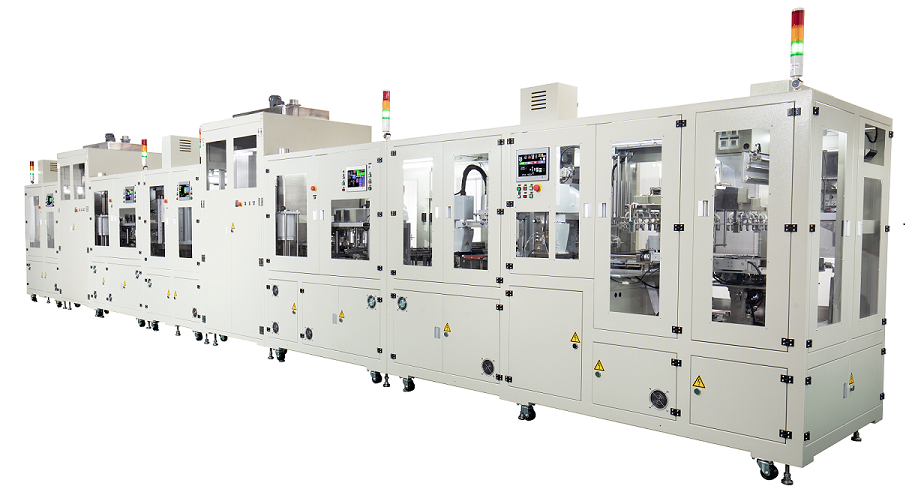
How Automatic Dipping Machines Work
Automatic dipping machines are designed to deliver a controlled, uniform application of conductive paste to passive components. Components are typically loaded onto Thin Carrier Plates (TCPs) or other carriers, then transported to the dipping station. The machine immerses components in the paste while carefully controlling immersion depth, speed, and timing to ensure a consistent coating.
Additional functions may include:
- Vacuum debubbling to remove trapped air bubbles
- Drying stations to solidify the conductive layer before unloading
- Automated handling to minimize human error and improve repeatability
This level of automation ensures that production maintains consistent quality while reducing defect rates.
Key Steps in the Dipping Process
The dipping process consists of several critical stages:
- Alignment and Handling – Components are precisely positioned to guarantee repeatable dipping.
- Dipping and Withdrawal – Controlled immersion ensures uniform coating thickness.
- Debubbling – Air bubbles are removed to prevent defects in the conductive layer.
- Drying – Components are dried before unloading to secure the conductive paste.
Each step is essential for achieving high-quality, defect-free coatings that meet industry standards.
Measuring Productivity: Beyond Simple Speed
Productivity in automatic dipping machines is measured not only by speed but also by yield, efficiency, and throughput. A simplified approach to calculate productivity:
Productivity = (Number of chips per cycle ÷ Cycle time ÷ 2 sides) × Yield rate
- Number of chips per cycle – determined by chip size and TCP capacity
- Cycle time – influenced by dipping speed and drying duration
- Yield rate – percentage of defect-free components
Optimizing cycle time, dipping uniformity, and yield allows manufacturers to maximize overall equipment effectiveness (OEE) and achieve better production planning.
Benefits and Industrial Applications
Automatic dipping machines offer several advantages for passive component manufacturing:
- Consistent Quality: Uniform coating reduces variability and improves reliability.
- High Throughput: Optimized cycles support large-scale production.
- Operational Efficiency: Automation minimizes labor dependency and human error.
- Scalability: Machines can be scaled to accommodate growing production demands.
These benefits make them indispensable in industries such as electronics, automotive, medical devices, and consumer electronics.
Global Manufacturers of Automatic Dipping Machines
Several companies have established themselves as leaders in automatic dipping machine manufacturing:
- LONG Automatic Machinery Co., Ltd. (Taiwan)
LONG is known for its innovative TCP technology, improving quality and reducing costs compared to traditional JIG plates. Their LGTM-6837 model delivers high throughput for small-sized chips. - CHIPSTAR (South Korea)
CHIPSTAR provides specialized dipping and coating solutions for passive components, focusing on precision and high-efficiency production. - TOKYOWELD (Japan)
TOKYOWELD develops reliable dipping machines tailored for industrial-scale MLCC and passive component manufacturing. - SAMIL (South Korea)
SAMIL offers automated dipping systems designed for high-volume production and consistent coating quality. - Creative Coatings (Japan)
Creative Coatings produces dipping and coating machines for electronic components, emphasizing accuracy and repeatability. - Keko (Italy)
Keko provides advanced automated dipping equipment for passive components, combining precision with industrial scalability. - FITO (South Korea)
FITO specializes in coating and dipping systems that deliver uniform coverage and high production efficiency for passive components.
These companies represent some of the most trusted manufacturers worldwide, providing solutions that help businesses maintain competitiveness in the fast-paced electronics industry.
Conclusion
Automatic dipping machines are a cornerstone of passive component manufacturing, enabling manufacturers to achieve consistent quality, higher throughput, and operational efficiency. By understanding the principles, key steps, and productivity metrics, production managers can make informed decisions about capacity planning and equipment investments.
For more information on automatic dipping machines and to explore solutions from leading manufacturers, visit the official websites of these companies and evaluate which models best fit your production needs.
